


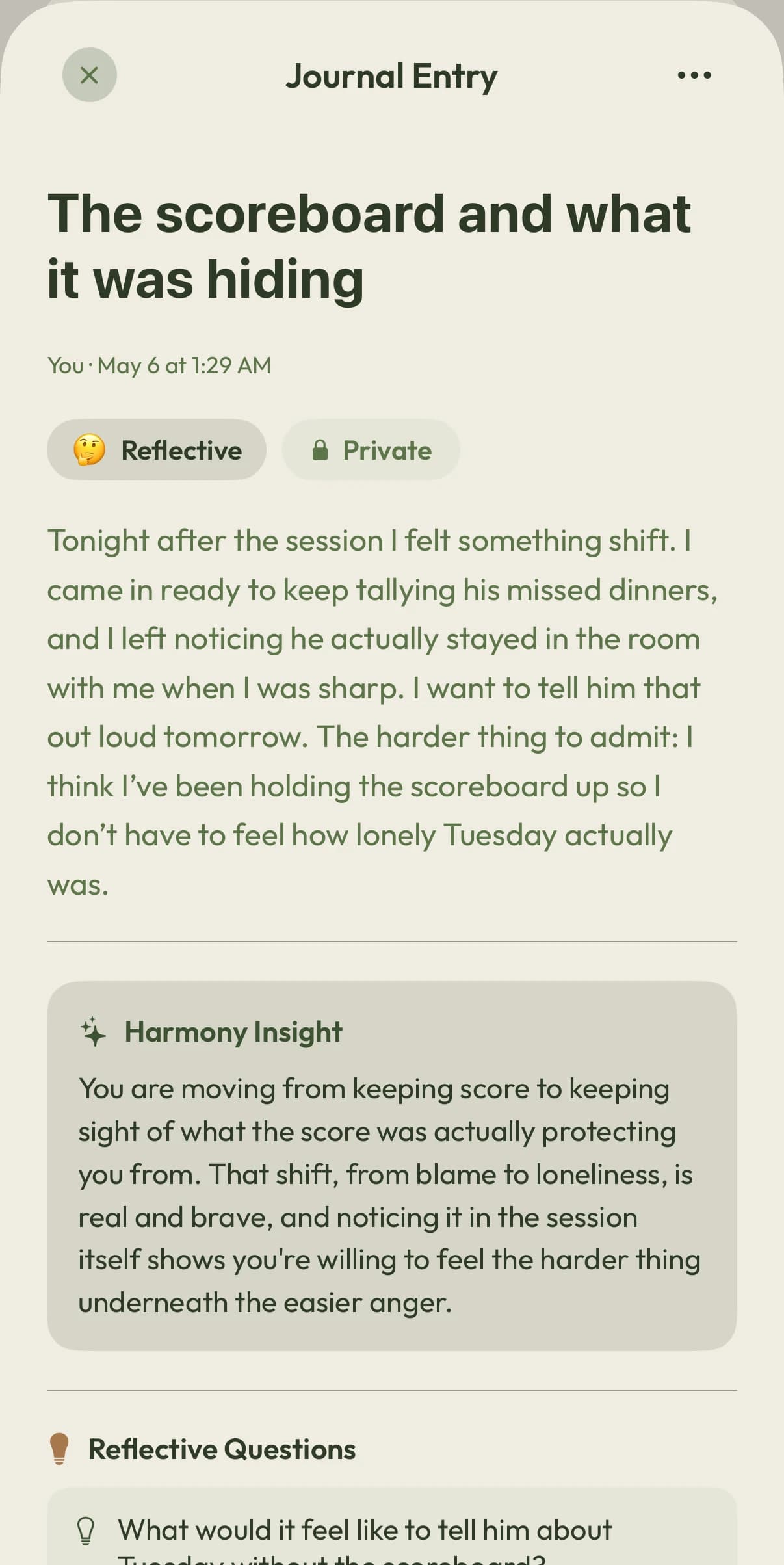
Reflect privately
Write freely, receive a grounded reflection, and choose what remains personal.
Give clients an optional way to practice clearer communication when real moments happen. If they connect you, they choose exactly what you can use and for how long.
Free to join. Harmony supports professional care; it does not replace it.

Harmony
Optional communication support
BETWEEN APPOINTMENTS
Private guidance for both partners
Reflection and shared goals
Client-controlled professional access
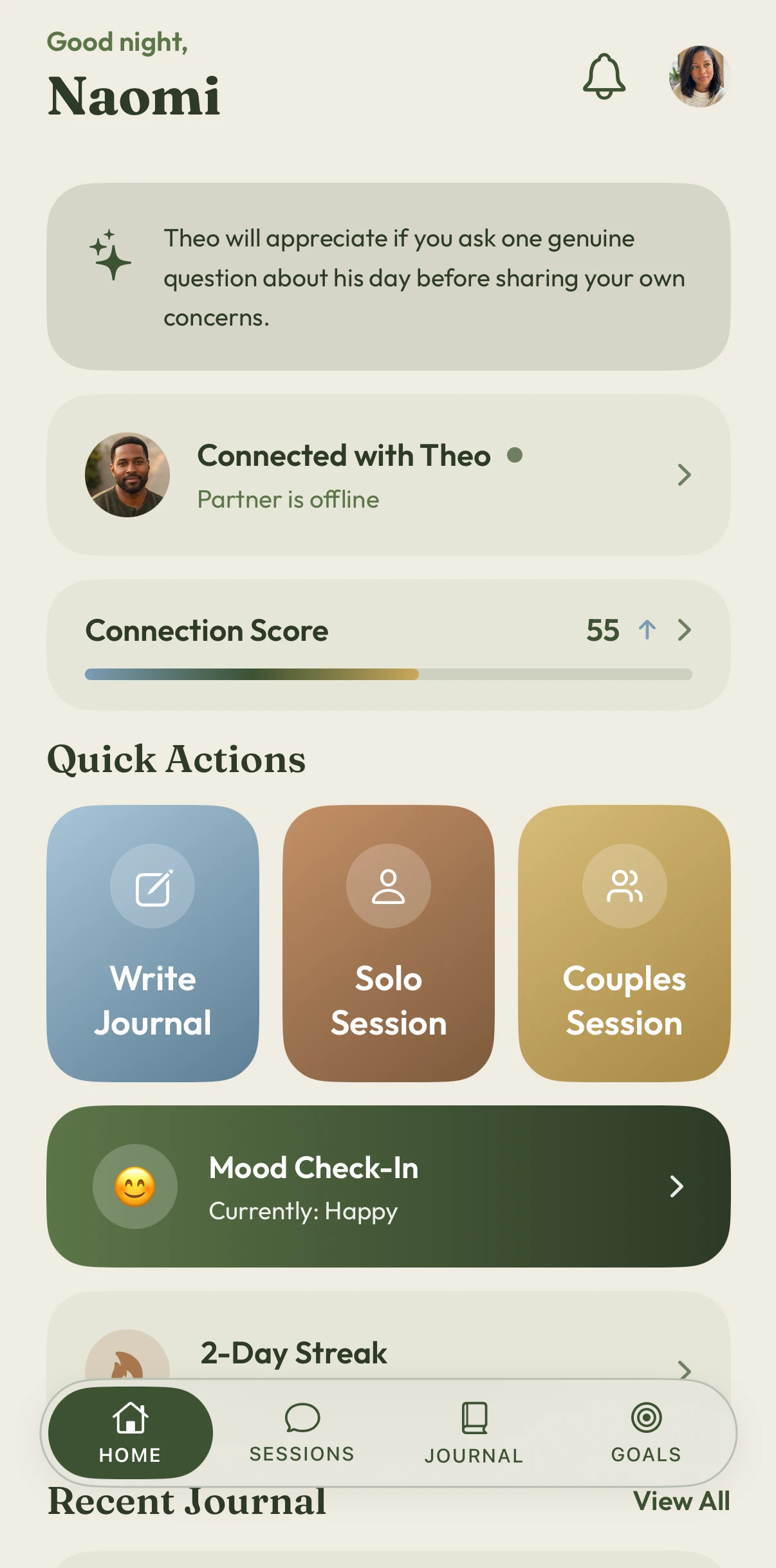
Private by default
No portal access until a client connects and chooses what to share.
Program cost
Free to join
There is no fee for a professional account.
Client access
One Harmony code
Share it only when Harmony may be useful.
Who it is for
Licensed professionals
Built for therapists and counselors with a current license.
Client privacy
Client controlled
Clients choose every area and can remove access.
During a difficult conversation
Harmony follows the shared conversation, but each partner gets guidance meant only for them. It can help one person name the hurt underneath a harsh opener and help the other hear the need before defending.
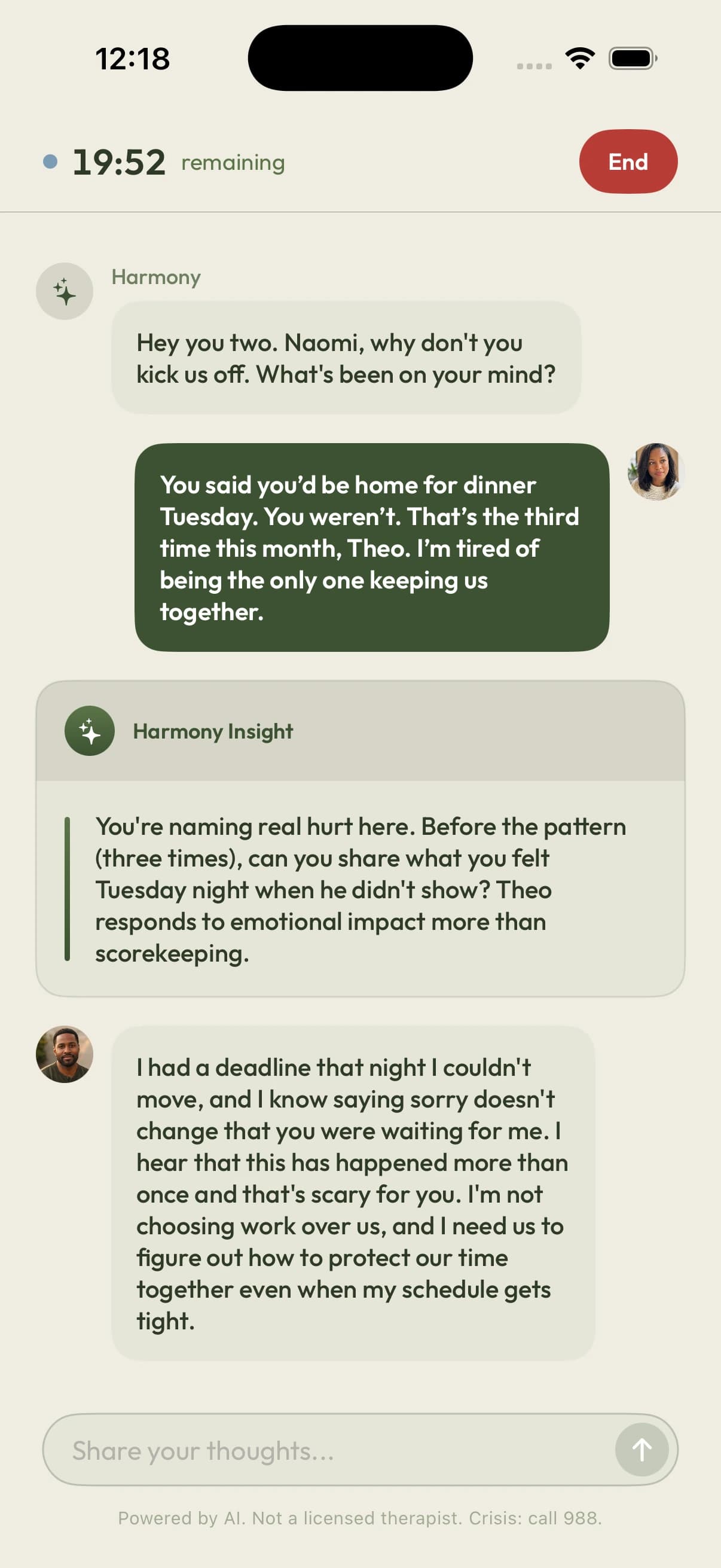
Naomi's private coach
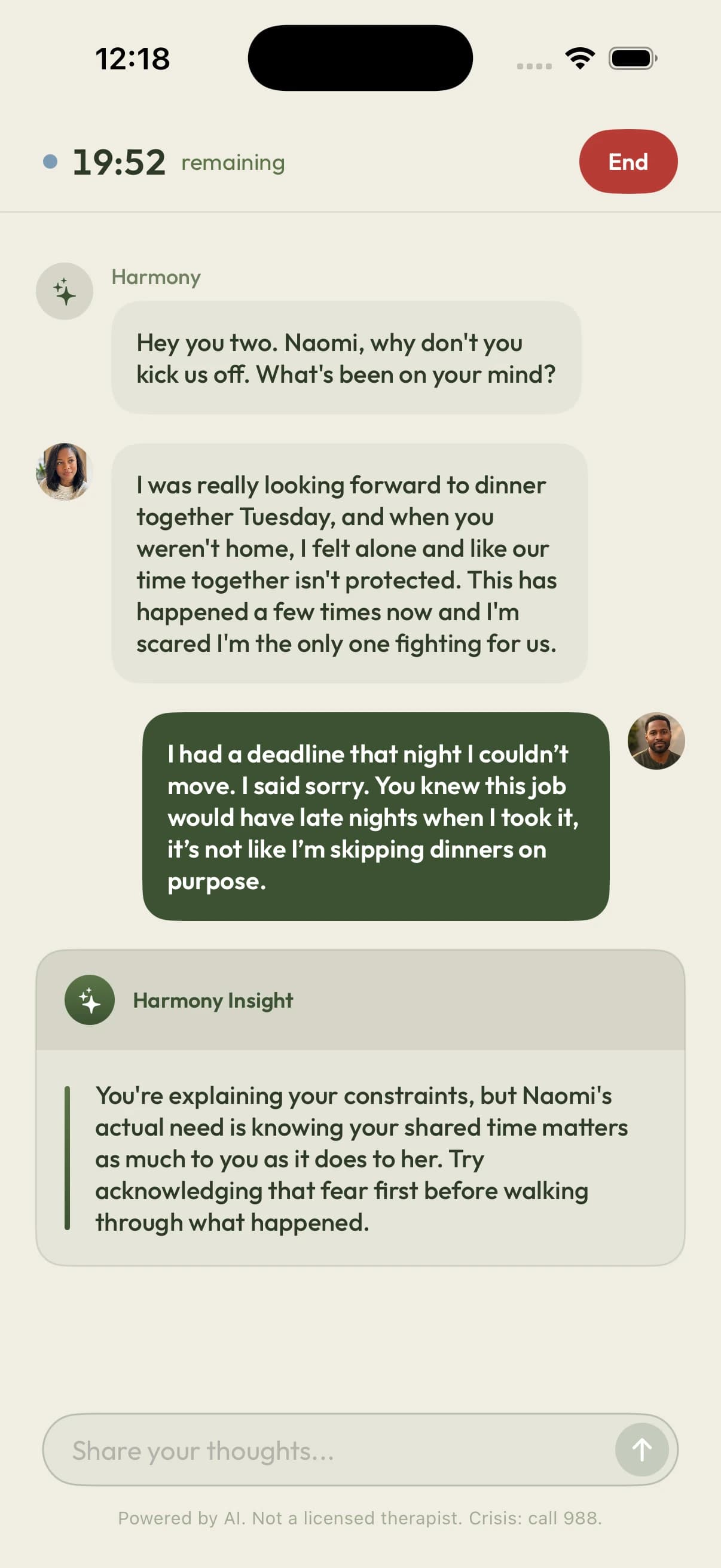
Theo's private coach
Same conversation. Separate private guidance.
Between appointments
Clients can reflect, understand a conversation, and practice a next step. The professional portal remains limited to the exact areas and dates each person chooses.
Write freely, receive a grounded reflection, and choose what remains personal.
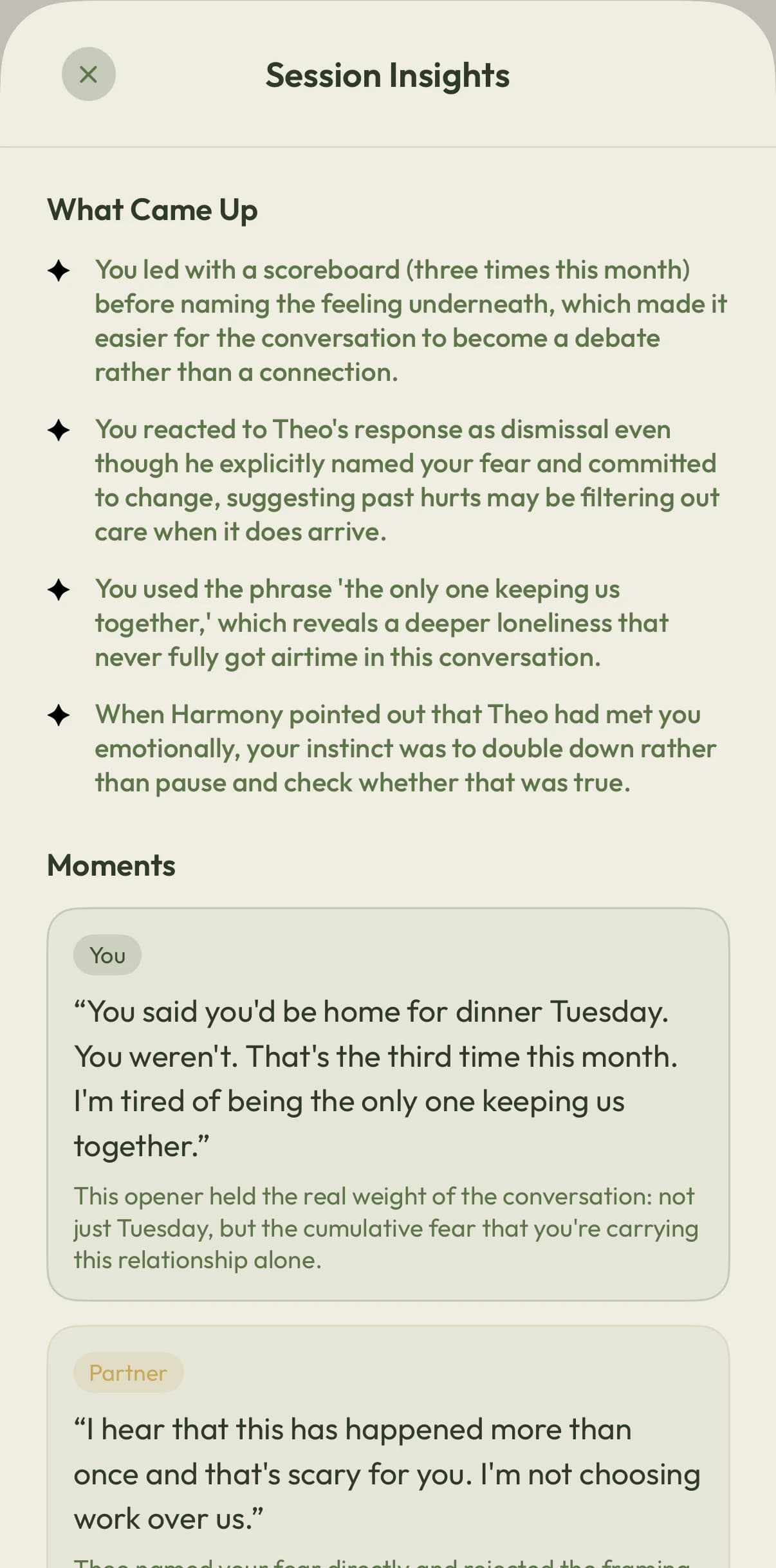
Revisit the themes, turning points, and language that moved a conversation forward.
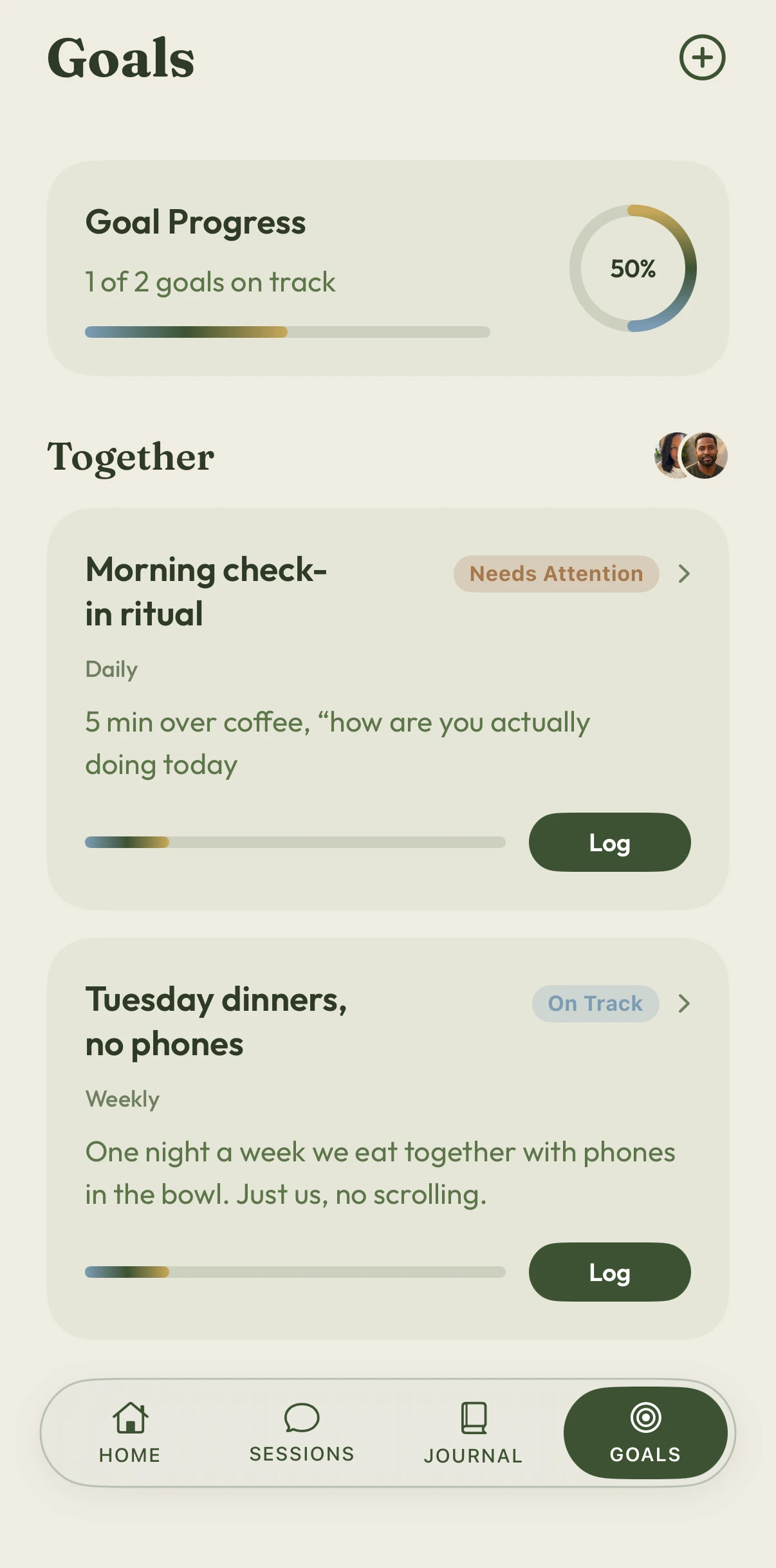
Turn insight into a personal or shared goal that can continue between appointments.
Harmony
CLIENT-CONTROLLED PDF
May 1–May 30 · Prepared by Naomi
About this record
Overview
With dates beside each point
Sessions
Selected moments
Journal
Only their writing
Shared work
Off unless chosen
Client-controlled context
A client can connect you for ongoing access or make a one-time counselor PDF. In both cases, they select the dates and categories. Turning an area off removes it from future portal answers.
Review client-shared records, ask Harmony one focused question, or add guidance for future sessions.
The client reviews the document and decides whether and how to send it.
A partner's private notes, moods, and solo sessions are not an option because they are not the client's to share.
How to share Harmony
Professionals get one simple Harmony code and a printable client handout. Entering the code shares nothing. Connecting to your portal is a separate choice inside Harmony.
Share
Give the optional code in conversation, email, or print.
Practice
The client uses Harmony privately or with a partner.
Connect
They may share selected areas with you or send a one-time record.
Questions
No. Harmony supports communication practice and reflection between appointments. It is not a health service, does not diagnose, and does not replace professional care or crisis support.
Not from the code alone. Your portal shows only the total number of uses. A person appears by name only if they separately connect you inside Harmony. They then choose exactly which Harmony areas and time range you may use, and they can remove access at any time.
A client can create a one-time PDF or connect you for ongoing, client-controlled access. For either option, the client chooses the date range and categories. A partner's private material is never included just because the couple is paired.
The program is for licensed therapists and counselors. Your portal opens after signup. Account access is separate from license verification, and Harmony shows a verified label only after a primary licensing source confirms the credential.

Create your account with your license information and enter the portal right away. License verification remains a separate, visible check.